Country Porch + The Muddy Mug
Begin with baked goods, a deli lunch or coffee. The Country Porch is a useful first stop when you want food before shopping; The Muddy Mug is another nearby option for an early start.
The first thing I remember is the leather—the smell of it, the weight of a handmade belt, and the quiet confidence of people who know exactly how to make something last. Muddy Pond is not a staged attraction. It is a working community, and that is precisely why the visit stayed with me.
On my visit, I expected a few country stores. What I found was more interesting: leatherworkers shaping saddles and everyday goods by hand, shelves of bulk foods and quilts, bakeries that make you slow down, and a sorghum tradition tied to family, season and place.
Muddy Pond sits in the wooded hills near Monterey, northeast of Center Hill Lake. It is an unincorporated community rather than a “Mennonite theme town.” Families live and work here. Visitors are welcome at the businesses, but the best way to experience the area is with curiosity, patience and respect.


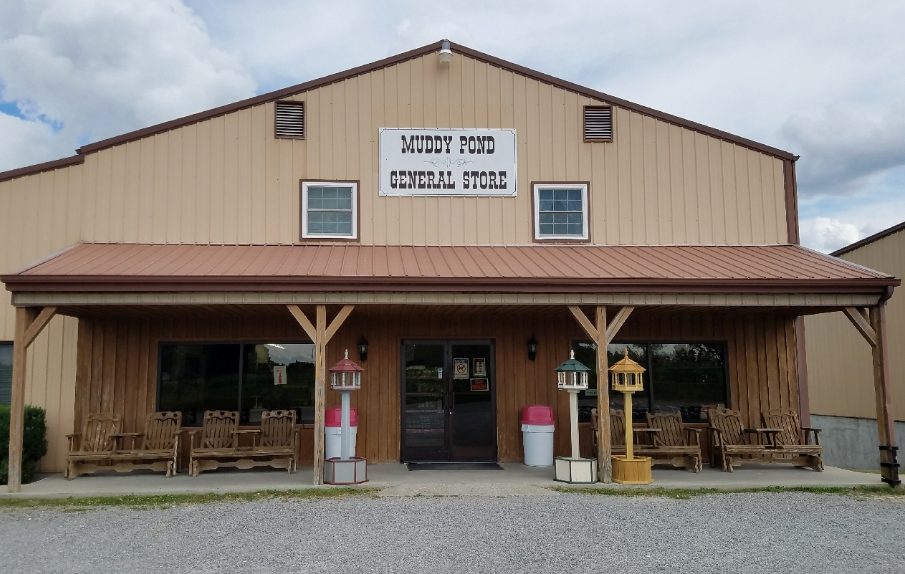
Most visitor-friendly stops sit along a short rural stretch east of Monterey. The General Store makes an easy navigation anchor; from there, the leather shops, cafés and sorghum operations are close together.
Muddy Pond General Store
3608 Muddy Pond Road
Monterey, Tennessee 38574
Driving note: expect winding country roads, limited shoulders and occasional slow-moving local traffic. Take your time.
Google Directions ↗Start with coffee or breakfast, work your way through the leather shops and General Store, then finish deeper along Muddy Pond Road with sorghum and seasonal stops.
Begin with baked goods, a deli lunch or coffee. The Country Porch is a useful first stop when you want food before shopping; The Muddy Mug is another nearby option for an early start.
Jay’s Custom Leather is known for custom saddles, tack, belts, wallets and other goods. Aaron Bauman’s shop continues the family leatherworking tradition next door. Double Creek Saddlery adds another working-shop stop nearby.
Browse bulk foods, deli meats and cheeses, baked goods, housewares, quilts, wooden pieces and practical things you rarely see together anymore. Check upstairs before you leave.
The Guenther family’s sorghum is the community’s signature food story. In September and October, selected production days may include cane pressing, steam, boiling syrup and tasting it warm. The Variety Store across the road carries sorghum, baked goods and household merchandise.
If you visit in fall, continue to the Mazelin family operation, whose farm history also reaches back to the 1960s. Greenhouses, produce and smaller roadside businesses can be seasonal—follow signs and confirm before making a special trip.
The leather shops are more than places to buy a belt. They show how useful objects carry design, judgment and family knowledge from one generation to the next.
Nashville PBS’s Tennessee Crossroads documented Jay Bauman’s path from a family of leatherworkers into custom saddle making. His work begins with understanding the hide, selecting the right section for each stress point and shaping the unseen seat by hand so horse and rider are comfortable.
Jay learned around his grandfather’s and father Aaron’s shops. That continuity is part of what makes Muddy Pond special: the finished item matters, but so does the accumulated knowledge behind it. You may see saddles and tack alongside belts, holsters, wallets and bags.


Muddy Pond makes more sense when you understand that “Mennonite” describes a religious tradition with many communities and different practices—not one uniform culture.
Mennonites trace their religious roots to the Anabaptist movement of the sixteenth-century Protestant Reformation. Common emphases include adult baptism, discipleship, community, peace and a faith expressed through everyday life. Tennessee’s Mennonite churches and settlements are diverse; some function mainly as congregations while others retain a distinctive Plain community life.
The modern settlement took shape in the 1960s as Mennonite families moved into the Upper Cumberland. John and Emma Guenther arrived in Tennessee during that period and joined a small community. Records for the Cumberland Mountain Church of God in Christ, Mennonite show a small congregation by 1971 that grew over subsequent decades.
Muddy Pond fits naturally into a larger food, craft and regional-history day.
Keep following the local food story around Center Hill Lake. Read the guide →
Pair traditional leatherwork with the area’s wider maker culture. Read the guide →
Go deeper into the communities and history surrounding Center Hill Lake. Read the story →
Muddy Pond is the kind of day trip that pairs naturally with a quiet evening at The Little Lake House—good food in the car, a new piece of leather and plenty to talk about.